
http://www.klickitatcounty.org/solidwaste/fileshtml/organics/compostcalc.htm
We opted for simplicity on our first attempt with alfalfa hay (carbon source) and horse manure (nitrogen source) as the sole ingredients. We sourced the hay from Texas Creek Ranch and have to thank Ekhard for graciously donating some old, broken down bails and the manure came from our neighbour who boards horses and had accumulated quite a bit over the winter.


Like making the world's largest lasagna, we spread thin layers of hay with scoops of manure, trying to water the layers along the way until we ran out of ingredients. Oh, I forgot to mention that Tim collected a dozen garbage bags of oak leaves he stole from a local Vancouver park near his house - he seemed to think the mold on the leaves would inoculate the pile to initiate the composting process. After covering the massive pile with tarps, we let microbiology take over.


Compost piles of such epic proportions, require mixing tongs of the hydraulic variety so when we were installing the poles, we took a moment to have Jason stir the stinking pile.
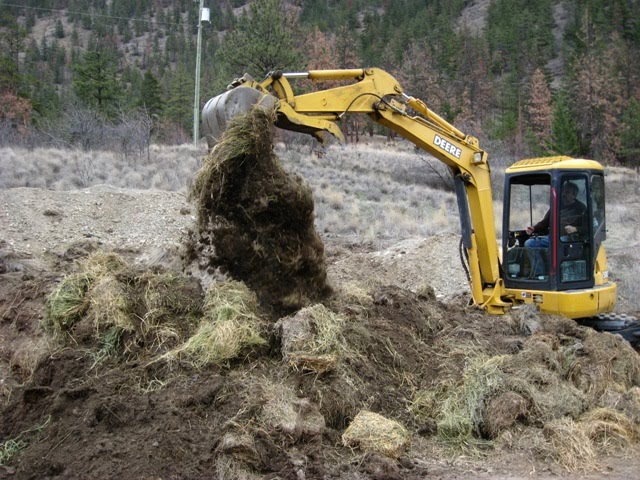
Of course, we recorded the temperature of the pile periodically over the 5 week period to ensure that weed seed would not germinate, kill pathogens, and to comply with the standards with certified organic protocols.


Hi Sam, my name is Shawn and I am building towards starting a small scale organic hop farm on my friends family farm in the Columbia Valley, Cultus Lake area. I am only armed with a passion for fine beer, a puzzling love of hops and an appreciation for farm life(probably a city life repression thing). I would love the chance to visit your farm some weekend this summer to check out your set up and pick your brain, in exchange for some hard work of course. Not having a background in farming is making this seem a bit overwhelming, so I am trying to form some good relationships and examples to help me get started soon than later. Please let me know if you would be interested in some free labour. shawn.turner007@gmail.com
ReplyDeleteEVERYBODY READ THIS TESTIMONY ON HOW I GOT MY LOAN FROM A LEGIT AND TRUSTED LOAN COMPANY My name is Kjerstin Lis, I have been searching for a loan to settle my debts, everyone I met scammed and took my money until I finally met Mr, Benjamin Breil Lee He was able to give me a loan of R 450,000.00.He also helped some other colleagues of mine. i am talking as the happiest person in the whole wide world today and i told my self that any lender that rescue my family from our poor situation, i will tell the name to the whole wide world and i am so happy to say that my family is back for good because i was in need a loan to start my life all over as i am a single mum with 3 kids and the whole world seemed like it was hanging on me until i meant the GOD sent loan lender that changed my life and that of my family, a GOD fearing lender, Mr, Benjamin, he was the Savior GOD sent to rescue my family and at first i thought it was not going to be possible until i received my loan, i invited him over to my family get-together party which he did not decline and i will advise any one who is in genuine need of a loan to contact Mr, Benjamin Breil Lee via email at (247officedept@gmail.com ) because he is the most understanding and kind hearten lender I have ever met with a caring heart. He doesn't know that i am doing this by spreading his goodwill towards me but I feel I should share this with you all contact the right loan company Email via: 247officedept@gmail.com or whatsapp +1-989-394-3740. .
ReplyDelete