Showing posts with label organic hops. Show all posts

Monday, March 25, 2013

Rhizomeville - the gift that keeps on giving

Well, it's spring again!

This really doesn't matter to the hop farmer though, because our work never ends. Spring, summer, fall, or winter....there is always something to work on at the farm. 

The above obligatory farmer gripe is well justified because we began pulling rhizomes out of the ground on March 9th while the rest of Canada was still under the strong, frigid grip of winter. Lillooet has been crazy hot over the past few weeks, hitting 16 degrees Celsius as these daily highs begin to warm the soil's surface awakening the underground stems. 

Yes, you heard right - underground stems. But why heck are stems growing underground? I don't know, I'm an ornithologist, not a botanist (Read more here about our research group's most recent work on the amiable Yellow Warbler). But what I do know is that this growth strategy is shared by other plant species, such as the familiar ginger plant and the irises you mom used to plant in your front yard. 

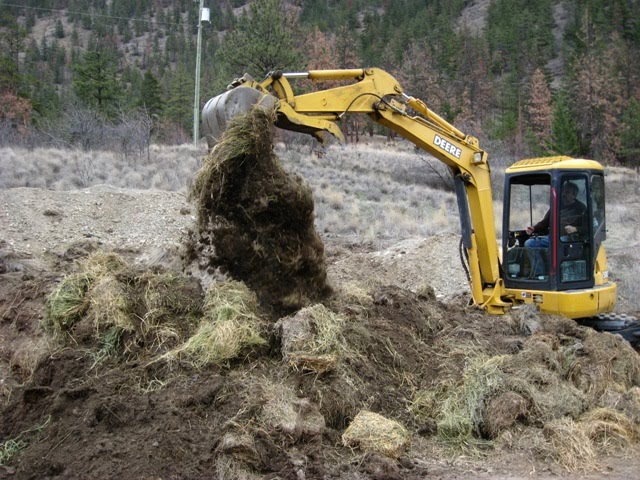
Question #2: Why are we hard at work pulling these out of the ground? Excellent question. Well, the answer is simple: Our friends at Left Fields organic farm in Sorrento, BC asked for some - I mean, a lot. Seems people across Canada have been in search of these odd little pieces of plant material with spectacular growth potential for quite some time. From the small-time gardener to the upstart organic hop farmer, rhizomes are the first place to start if you want to grow hops yourself or if you just want to enjoy their unique growing habit on the south-facing side of your domicile.    

The folks behind Left Fields, Rebecca Kneen and Brian MacIsaac, are perhaps best known for their on-site organic farm brewery called Crannog Ales. But they are quickly becoming equally well-known for their propensity to get hop rhizomes into the hands of botanophiles across the country. Here at Bitterbine, we are direct suppliers of certified organic rhizomes (PACS #16-487) to Left Fields. We dig, they distribute, people grow.

Keep checking back because this hop farmer has plenty more to report on...including the first tranche of hop shoots to be picked and shipped to fine restaurants around Vancouver.  


Tuesday, July 26, 2011

Phytoseiulus persimilis: Ace in the Hole

Mites and aphids. Those two words uttered in the presence of a hops farmer and you will likely see them shudder in fear of their crop. But for these two hops farmers, we get excited at the opportunity to try something cool to combat these pests. 


The first signs of spider mites arose during the last week in June. A few light-coloured leaves with a smattering of bleached spots on the upper side of the leaf and a light webbing on the underside near the petiole was a sure sign that the mites have arrived. 

We have never really witnessed the speed at which these pests can progress so it came as a surprise that in one week's time, a few localized outbreaks had impacted our plants significantly. Tim being the insect man, already had the answer. Unfortunately, he was the only one who could pronounce it: Phytoseiulus persimilis.


It turns out that the above scientific name is nothing but a mite with an appetite for other mites, especially the spider mite pest. What makes these mites so special is that they are small enough to penetrate the protective webbing of the spider mites to attack them on their own turf. Once consumed, the predatory mite can reproduce much faster than its prey. Soon enough, there are are more wolves than deer, so to speak and Voila! Problem solved. At least, that was the idea. 


The application procedure was simple yet time consuming: take one leaflet infested with the predatory mite and attach it to the hop leaf at the petiole. Over an over again to each affected plant. 

The method is proven to be effective in green houses but not fully tested on open-air hop farms. Consider this as trial one.  Time will tell whether this pest infestation will be curtailed by our last-minute bio-control application method. 

Stay tuned with how these organic hop farmers are dealing with the aphids...

Thursday, June 17, 2010

Faith and Uncertainty in Hops Farming

I came across this video that was taken at the Rising Sun Farms of Colorado, one of only a handful of hop farms in the United States growing organically. A late spring hail storm caused serious damage to this 9-10 acre hopyard.


 This video is heartbreaking to watch, particularly to the fellow hop grower. As noted in the video, most of the tender hop shoots were broken from the hail storm, which is likely to stunt the growth of the entire hopyard. One of the comments on the video came from another experienced grower who mentions new shoots will develop just below where it was damaged and continue to grow upwards. True - but such damage is likely to reduce yields significantly, not to mention the additional labour required for retraining the bines.

At our hopyard, we notice that hop plants respond to broken shoots by initiating secondary shoots along the entire bine. Unless these shoots are pruned, dozens will develop simultaneously, creating a bushy like appearance below the point of damage.

From the plant's perspective, this makes sense. As a survival strategy, an explosion of new shoots ensures at least a few bines latch on to the climbing substrate to continue their vertical trajectory. From the perspective of the farmer, this is simply unnecessary vegetative growth and an inefficient use of available nitrogen.  The solution, as we have discovered, is to prune all other side shoots except for ONE just below where the damage occurred. The plant then concentrates its energy into developing this single shoot. This should be done as soon as possible to encourage this single shoot and discourage continued growth of other side shoots.

In any unavoidable disaster such as the one at Rising Sun Farms, its always a good idea to have a few cold ones in the fridge to lessen the blow. Best of luck to those growers in Colorado!

Thursday, May 13, 2010

Composting 101

Part science, part cooking class, composting is central to any organic farming operation - especially a farm like ours whose soils have no history of cultivation. Recent soil tests confirmed that we had only a modest organic content (2.5%) so composting would be the quickest way to supplement existing organic matter and support the young hop plants. After some quick calculations, we realized that we needed A LOT of compost to cover the 15 rows of the one acre hopyard.  So, where to start? As it turns out, it's not that complicated. However, there are a number of factors that will influence the rate at which your raw material will break down. The most important consideration is obtaining an optimal Carbon:Nitrogen ratio. There are a number of compost calculators online to help you estimate this ratio using a suite of raw materials.

http://www.klickitatcounty.org/solidwaste/fileshtml/organics/compostcalc.htm

We opted for simplicity on our first attempt with alfalfa hay (carbon source) and horse manure (nitrogen source) as the sole ingredients. We sourced the hay from Texas Creek Ranch and have to thank Ekhard for graciously donating some old, broken down bails and the manure came from our neighbour who boards horses and had accumulated quite a bit over the winter.


Like making the world's largest lasagna, we spread thin layers of hay with scoops of manure, trying to water the layers along the way until we ran out of ingredients. Oh, I forgot to mention that Tim collected a dozen garbage bags of oak leaves he stole from a local Vancouver park near his house - he seemed to think the mold on the leaves would inoculate the pile to initiate the composting process. After covering the massive pile with tarps, we let microbiology take over.
After the first week, we discovered some surprises underneath the tarp...

Aside from being knee deep in animal excrement, my favourite part of the composting process is the stirring. For those of you who know me, this is also why I can't make rice but CAN make a mean stir fry.
Compost piles of such epic proportions, require mixing tongs of the hydraulic variety so when we were installing the poles, we took a moment to have Jason stir the stinking pile.


Of course, we recorded the temperature of the pile periodically over the 5 week period to ensure that weed seed would not germinate, kill pathogens, and to comply with the standards with certified organic protocols.

Temps after the first week. Looks like we need a thermometer a higher scale...temps regularly reached above 135 F in subsequent weeks.

Wednesday, May 5, 2010

Trellis Triumphant


So much has happened in the last few months at the farm I don't know where to start! Spring has sprung forward like a jack-in-the-box and all of a sudden we find ourselves tending to second year hops planted under an almost-finished one-acre trellis! How did that happen!?

Let's take a few steps back:

We tried to install all the trellis poles last fall but an early winter caused us to rethink our schedule. So as soon as the ground thawed the first week of March, we were eager to complete the 88-pole trellis. We called up Jason and he was quick to return, this time with a Deere 50C excavator. Not too big not too small, this machine proved to be far more effective than a power auger. There's just no way an auger would be able to penetrate the aggregate rock we discovered at depths of about 3' and sometimes shallower.

Working quickly, we were able to sink one pole every 5-10 minutes. With the interior poles complete, we could now even out the lumps and bumps of the hop yard. Our budget solution was to drag a grader blade up, down, and across the rows from behind our F150. The blade was fixed to an old towing V and chained to the the truck hitch and we were off to the races in fine 'Chariots of Fire' style.

In my next post, I'll fill you in on all things compost...


Tim in the F150 discovering a wee dip in the terrain with Jason quick to the rescue!

Wednesday, February 3, 2010

Fighting fire with fire

It's the dead of winter here at the farm but images of blazing wildfires from the previous summer are still fresh in our minds.


Luckily, our farm is situated on the east side of the Fraser River which provided a buffer of safety from the infamous infernos that made Lillooet a household name during the summer of 2009. However, we realized this was a relatively fragile buffer after witnessing charred pieces of woody debris falling from the sky onto our property.


Smoke plumes from the wildfire were ejecting this debris thousands of feet into the sky only to fall back to the earth many kilometres away. If only one still contained embers, it could initiate a new fire wherever it fell.


This got us thinking about how to better protect our property from future blazes. After all, the pine beetle had ravaged most of our ponderosa pines, leaving hundreds dead like giant matchsticks just waiting for a spark.

So in mid-January with a nice layer of snow on the ground, we set forth into the nearby Ponderosa patch with our new favourite farm gadget, the Stihl Farm Hand chainsaw to 'reduce the fuel load'.

The blue stain of the wood is indicative of a pine beetle infestation and is created not by the pine beetle but a fungus carried in its mouth parts. When the beetle bores into the wood, the fungus spreads throughout the tree constricting the flow of water and nutrients which eventually contributes to the death of the plant!


We then set ablaze a number of large piles of debris from the fallen trees. This one was especially impressive!


The resultant ash from these fires will be scattered to other areas of the property to encourage establishment and growth of native deciduous vegetation to attract wildlife and migratory songbirds, in particular. The foliage of showberry, maple, dogwood, and rose provides opportunities to glean for insects as well as cover during breeding and migration.


Monday, January 18, 2010

The Big Freeze & The Big Bad Trellis

Here at Bitterbine Farm/Ranch (we haven't quite figured out which description best describes our 18 acres...) we bring in the New Year with a half-finished trellis for the one-acre hop yard. There has been a Herculean effort by friends and family during the fall to get us to this stage. The majority of their sweat was poured into making the 88 hand-made cedar poles - the cellulose bones of the trellis system.


After getting a much-needed tutorial from our neighbour Hal on the ins-and-outs of working with such massive raw timber, we pulled out or brand new Stihl Farmhand Chainsaw and started cutting the cedar timber to size.


We found it fitting that much or our Lumberjack work occurred during the month of Movember while Tim and I were sporting our magnificent moustaches, which brought in hundreds of dollars for Prostate Cancer research!


Each pole was measured to 21': 18' out of and 3' into the ground. The final product was just the right size for one person to maneuver with only partial back strain. We split the poles to have substantial girth (a few additional inches than what is recommended) to withstand Lillooet's infamous wind gusts that shoot through the Fraser Valley during the hot summer months.


We're also putting our faith in the natural strength of Thuja plicata to flex and not break in the face of gusts exceeding 80 km/hr. We were given a taste of what's to come on the night of November 30th after putting up a dozen poles: Strong winds and torrential rain fell that night, forcing over poles that were only partially back-filled.


With the pole yard count reaching the magic 88, we set our sights on getting them into the ground before freeze-up. With the help of Hal and his hard working Deere, we managed to install the perimeter poles to the yard by the end of Movember. But with forecasts calling for some serious sub-zero nights for the first week of December, we had precious little time to get the rest of the poles in before the ground became like hardened concrete. Turns out Mother Nature gave us one last day - December 1st - to install the remaining 50 interior poles. Good luck, we thought. Nevertheless, we added a powerful skid steer to the equation and managed to push through the encrusted piles of soil to infill about a dozen more poles.


By about 2:30 pm, we looked at our progress and Garrett the skid steer operator said, "Boys, winter will be here in about 20 minutes." He was right, the sun was heading back behind the mountains and a rapid chill could be felt in the air. Although the unfinished trellis was a little disappointing, we figured to just pick-up where we left off come spring time.


In the mean time, let's make some hoppy beer!